

.webp)
.webp)
.webp)
.webp)



If you are looking for an easy Himalayan hike from Kathmandu for those time-pressed but wanting to see dramatic mountain views, you can’t go wrong with the Langtang Valley trek. This 8-day walk can be easily shortened to 5 or 6 days if you want some spectacular mountain scenery.
Sep-Dec/Mar-May
4773m
Min 2 people
The Langtang trek, located in the north-central Himalayas of Nepal, ranks as the country’s second most popular trek after the Annapurna Circuit and Everest Base Camp routes. Known as the “Valley of Glaciers,” Langtang is celebrated for its towering mountain ranges and extensive glacial formations.
The 8-day Langtang trek is ideal for beginners and those hiking seasonally, offering a relatively short and manageable route. While the duration makes it accessible, the pace can still present a physical challenge. Along the way, trekkers are treated to an extraordinary variety of natural scenery.
The journey typically begins with a bus ride to Syabrubesi, the trek’s starting point. From there, the trail passes through villages like Pahiro, Bamboo, and Upper Ramche before reaching Kyangjin Kharka, with an optional ascent to the lower peak of Kyanjin Ri.
Within just a few days, hikers experience a remarkable transition in landscapes—moving from dense forests and alpine meadows into rugged glacial valleys. Panoramic views of snow-capped peaks unfold throughout the route, and the region’s rich biodiversity offers chances to spot red pandas, Himalayan black bears, snow leopards, and various deer species. The valley itself is dotted with serene lakes, rushing rivers, waterfalls, and ancient glaciers, making every stage of the trek visually captivating.
Beyond nature, the cultural experience is equally rewarding. The local Tamang communities, who follow Buddhism, welcome visitors with their distinct traditions, music, dances, and traditional architecture.
Accommodation along the trail consists of well-established tea houses, where trekkers stay overnight. Meals are straightforward but include flavorful local cuisine, such as freshly made yak cheese, a regional specialty.
As per current regulations in Langtang National Park, foreign trekkers must be accompanied by an authorized guide, meaning solo trekking is no longer permitted. For this reason, our Langtang Valley tour packages include a licensed, professional guide to ensure compliance with park rules and a safe, informed journey.
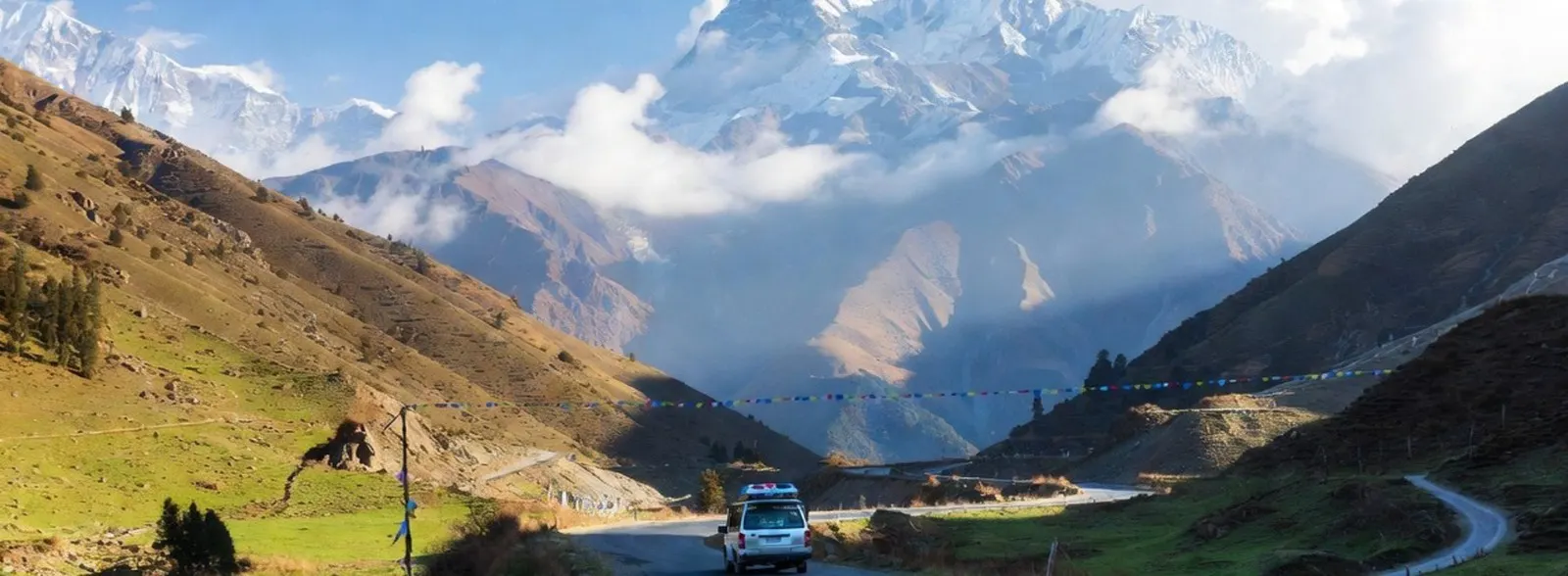
We start early from Kathmandu to Syabru Besi. As we leave the hotel in Kathmandu to go to our starting point of the trek, Syabrubesi, we travel on a private jeep or bus while the city is still quiet and cool in the early morning. The trip north takes us out of Nuwakot, going along the Trishuli and up through forested ridges and small villages that wake up to the morning. Halfway to Syabru Besi we cross through Dhunche, the district headquarters of Rasuwa, the road gets rough, the river and mountains close in around us.
After driving for 6 to 7 hours we arrive at Syabrubesi (1,460 m) a little mountain town at the crossroads of the Bhote Koshi and Langtang Khola Rivers. The village is jumping with the arrival and departure of trekkers making their way to the Langtang Valley. Syabrubesi is the last stop on the trek with ATMs, pharmacies, hot showers and mobile network. So, take it slow on your arrival. Withdraw money, stock up on supplies and enjoy a nice dinner while reflecting on the adventure that awaits you tomorrow.
Your guide will help you discuss the details of the upcoming trek, what to expect, and how to pack as you enjoy your dinner. Get an early night sleep as the trail begins to wind up the mountain in the next morning.
The morning is perfect for starting our trek to the Langtang Valley and your first glimpse of the valley is unforgettable. After breakfast, cross the long bridges over the Bhote Koshi River at Syabrubesi. Your journey on foot begins as soon as you step off the bridge on the other side! The trail winds through the forest quietly following the northern bank of the Langtang Khola upstream. We begin our trek through Langtang Valley in an easy pace and gentle climb.
After walking 2 km, (40 minutes hiking) we come to a beautiful forest clearing called Tranquil Valley. You will understand why this place has been given this name straight away and appreciate the silence enveloping the forest. The trail is wide and easy to follow and you should be able to catch your breath after walking downstream from Syabru Besi. From Tranquil Valley we follow the trail for 1.27 km (25 minutes hiking) to the next village of Waiba Camp.
Waiba is only a camping zone as there are no permanent residents here. It is a lovely place with the trail being very well defined. The forest is a bit more dense and if you keep your eyes on the canopy of the trees and the bamboo groves along the river below, you are likely to spot wild red pandas on the trail ahead!
Just beyond Waiba, the trail crosses or runs alongside the Domen River, a glacier stream that feeds into the Langtang Khola. Depending on the time of year, the crossing can be a wade or a scramble over rocks, but either way, it is a welcome and refreshing stop to break a sweat. The trail winds alongside the beautiful Domen, a glacial stream and through mixed forest of tall trees, two rivers running below and climbing steadily ahead. The trail ahead winds through pretty mixed forest to Pahiro, a small riverside settlement with a couple of teahouses for your convenience.
From Pahiro, the combined distance to Bamboo is 3 kms, which will take about an hour to walk at a relaxed pace. The trail meanders beside the river, crossing from one side to the other with suspension bridges and through bamboo groves, thick enough to cast a shadow over the trail, which gives this place its name. Bamboo is a good place to stop for lunch with simple village fare at the teahouses with the sound of the Langtang Khola nearby for ambiance. After lunch, we follow the trail as it climbs more steadily to Rimche.
From Bamboo to Rimche is approximately 2.32 km (50 minutes hiking) and involves some exposed precipices over the river gorge and a steady climb up and through the forest. Rimche is a nice place to spend the night, situated above the trail at 2,400 m. It is genuinely one of the best overnight stops on the lower trail. We spend a few minutes walking and arrive at Upper Rimche. The trail goes from Rimche to Upper Rimche about 1 km, 20 minutes hiking. Upper Rimche is less traveled but located high above the village of Rimche is a fantastic place to experience the Langtang National Park. The trails through this beautiful mountain village are great, the tea houses are personal but with wonderful forest views and the views are even more expansive than at Rimche. Our overnight stop is in Upper Rimche.
Today is the longest day as we head towards Langtang Village and by late afternoon we will have hiked through at least three unique landscapes. We start with a good breakfast at Upper Rimche and set off at 7:30 AM at the latest as the day is long and the altitude is gained with every step.
From Upper Rimche we begin our long trek up towards Ghodatabela (3,020 m). The trail begins its long climb up Ghodatabela. This leg of the trek is 5 km out of Upper Rimche and will take approximately 1.5 to 2 hours of steady climbing to Ghodatabela. The trail meanders through the forest which opens out as we climb. The forest changes character as we climb higher with the altitude. The trees get sparser and taller and we can hear the river winding below and the chill air gets nippier. Somewhere along this trail the snow-capped peak of Gangchenpo (6,387m) appears from out of the trees for the first time, a majestic sight that stops most trekker’s cold for the first time on this trail.
Ghodatabela is a broad valley at 3,020 m with a wonderful view of the surrounding mountains. The name means horse stable and the wide valley really lives up to its name as we can imagine horses galloping across this wide open space at the base of the mountain. There is a national park checkpoint located here where your trekking permits are checked before entering the park and a few teahouses where most trekkers stop for lunch. After the long climb up, the wide sweeping valley makes for a great place to stop for lunch and catch your breath. Eat well and drink lots as it will be needed for the long day ahead. Rest for 30 to 40 minutes here is the best and we will continue on.
From Ghodatabela we walk for another 6 km to Langtang Village, passing through Thyangsyap a little village with some prayer flags and mani walls, and through the Gompa area with an old monastery, where the trail takes on a more Tibetan feel, with yaks, prayer flags, mani walls and the valley walls getting higher and higher with each step. This will take approximately 2 to 2.5 hours and is beautiful walking along the trail.
When Langtang Village (3,430 m) comes into view, you will undoubtedly start to feel the effects of the long day and the altitude. The village of Langtang was largely destroyed in an earthquake triggered avalanche in April 2015 that claimed over 200 lives in mere seconds. Much of the village has since been rebuilt with the stone buildings and tea houses that we know today, but the flags and chortens that dot the village remain as a marker of faith for the people of Langtang. This village has a unique place in the hearts of those who have been lucky enough to visit it and the friendliness and spirit of the locals in Langtang is truly inspiring and something that stays with you long after your return home. Though there are few teahouses, the village offers the most fantastic food and overnight accommodation in comfort.
Today is a day of gentle walking – and a welcome relief after the trek of Day 3. We set off after breakfast at a relaxed pace and are able to enjoy the views of the valley that open up before us as we follow the trail up and out of Langtang. The trail to Kyanjin Gomba runs generally flat along the wide valley until it begins its gentle climb upward.
It winds through the wide pastures where yak cattle are often seen grazing. In fact, it is common to encounter yaks being driven from one pasture to another as we make our way along the trail. The yak herdsmen move slowly along with their charges chatting in Tamang, the local dialect, as they slowly move the sure-footed animals from one pasture to another. This is one of the most picturesque walks on the trek and offers wonderful photo opportunities.
The trail passes numerous mani wall long lines of prayer rocks upon which are carved Buddhist scriptures and mantras and large chortens (stone pagodas) from which flutter prayer flags that dance and play in the strong mountain winds. The wind is always strong at this altitude and the swishing of the prayer flags becomes white noise that one hardly notices after a while at this altitude.
This is also the point on the trail where the Langtang Lirung comes into full view for the first time for most hikers. This spectacular 7,234m peak rises directly above the valley in an immense wall of ice and rock to either side of the trail and has a very intimidating effect on many hikers who actually slow down on the trail after they first see it. After passing Mundu, the trail begins its gentle climb up toward Kyanjin Gompa (3,870m) and we arrive in the early afternoon, with plenty of time to explore this fascinating little village and get a good look at the mountain views surrounding it.
The highlight of your day should be a visit to the yak cheese factory before it closes for the afternoon. This is a great place to taste the local cheese, which is made daily, while enjoying a nice cup of butter tea. Afterward, you can also visit the Kyanjin Monastery as the afternoon light begins to fade.
As the sun goes down, the wind coming off the glacier picks up speed creating a wonderful swishing sound as it flutters the prayer flags. This is one of those experiences you will find yourself recalling for years to come after your return to Kathmandu.
This day is designed to allow you to acclimatize to the higher altitudes and is also included in our 8-day itinerary to give you extra time to explore the area. This is a crucial day to allow your body to adjust to the thinner air at higher altitudes where we will spend several days on our trek. Your body is already working overtime to produce more red blood cells even at rest, and rushing up to higher altitudes too soon is the best way to assure altitude sickness strikes on this trek. With that said, this day is also designed to give you a chance to explore the area and enjoy some leisure time.
We suggest spending the early morning hours walking up to the viewpoint above the village to get a good look at Langtang Lirung with the first morning light. The rising sun illuminating the glaciers and slowly creeping down the sides of this great peak is a sight that is difficult to capture in words.
After a slow and easy breakfast, we spend the morning enjoying the village and our accommodations before heading out for a short acclimatization hike up toward the base of Kyanjin Ri. This will give us a good opportunity to stretch our legs, test our lungs, and become accustomed to the sights and altitudes we will encounter on Day 6. We return to Kyanjin Gompa for lunch and spend the afternoon exploring deeper into the village, as well as the Kyanjin Monastery, where the head lama is often seen offering blessings to hikers who come to visit the monastery. A visit to the upper pastures and the fantastic views of the valley and glacier with the yaks grazing on the thin alpine grass is also a must for acclimatization. In the evening, enjoy a hearty meal and plenty of fluids and prepare for an early night’s sleep. Tomorrow is the day!
This is the day you have been dreaming about since you first arrived in Kathmandu. We rise early, around 5:00 AM, to watch the sunrise over the valley from the viewpoint above Kyanjin Gomba. The sky is dark when we leave the village and the views of the stars above the village are truly exceptional at this altitude.
With a light breakfast in hand, we begin the climb up and out of the village toward Kyanjin Ri. The 3- to 4-hour climb to Kyanjin Ri (4,773m) begins gently enough but quickly picks up in pace and intensity. At this altitude, the air is much thinner and we soon find ourselves climbing steadily up and over the ridge. The view from the top is simply incredible and we begin to feel the reward of all the hard work from the last few days as our lungs begin to adjust to the thinner air. As we climb, we set very small goals for ourselves and slowly work our way up the trail, focusing our efforts on these goals. We find that we begin to turn around and look back more and more often as we climb the trail, marveling at the incredible view of the valley below us that is simply getting more spectacular with every step.
The summit of Kyanjin Ri consists of a relatively large rocky plateau from which we can see truly breathtaking views of the Langtang Valley. To the north, the glacier-clad form of Langtang Lirung (7,234m) rises up and over the valley in a most spectacular display. To the east, we can also see the peaks of Dorje Lakpa (6,966m) and Gangchenpo (6,387m). Closer by and just a bit lower than Kyanjin Ri, we can also see the summits of Yala Peak (5,520m) and Naya Kanga (5,844m). On a clear morning such as this fine autumn morning, it is not uncommon to also see Shishapangma (8,027m) in Tibet, which is the 14th highest mountain peak in the world, stretching out before us on the distant horizon just a few kilometers away. Most folks simply stand and marvel at the view from the summit of Kyanjin Ri for a few minutes before heading back down the trail toward Kyanjin Gompa.
Trekking up to Tserko Ri (4,984m) offers another incredible set of views from a second, slightly higher summit to the east of Kyanjin Gomba for those who have acclimatized well. It is a longer and more challenging day’s hike as well that typically takes 5 to 6 hours to complete from Kyanjin Gompa. Many seasoned Himalayan trekkers consider the views from Tserko Ri to be the highlight of the entire Langtang Valley Trek and it is offered as an optional extra day hike. We will discuss the idea of heading up to Tserko Ri with you on Day 5.
We descend back to Kyanjin Gompa in the afternoon and enjoy a nice warm lunch before spending the last evening in this wonderful village watching the mountains gradually change color from white to gold to orange to grey before finally settling down for the night for our last night in Langtang.
As we prepare to leave Kyanjin Gompa, there is always a certain amount of sadness that sets in – and we can hardly explain exactly why. You arise early on this day to witness the sunrise over Langtang Lirung from the village. Standing in the brisk cold morning air you sip your hot tea and watch the mountain turn golden and strangely enough, you are already reluctant to pack up your gear and leave. The mountains will always be here and you will return again one day – so take heart as you prepare to head back toward Syabrubesi.
The trail generally follows the same route downward as we followed upward on Day 4, but everything looks somewhat different on the way down and you find yourself noticing many things along the trail that you simply didn’t have time to enjoy on the way up. The long day stretches out before us and we have 21 km to cover as we slowly make our way back toward the Syabrubesi valley. Downhill trails are much harder on the knees than up trails so trekking poles are suggested for this day’s hike.
We stop briefly for lunch at Ghodatabela (3,020m). Again, the trail winds up through wide pastures offering spectacular mountain views before we reach the intersection with the trail to Lama Hotel. From there, the trail slowly descends through the trees and into Upper Rimche and ends finally at Rimche (2,400m) for the evening. The air seems to grow more dense and warmer as we descend below 3,000 meters and many hikers find that their appetite returns and their headaches subside after several days at these higher altitudes. Sleep well tonight as tomorrow is also a short day and we will have a long drive back toward Kathmandu.
You wake up for the last time in the mountains and the day is absolutely beautiful as we set off on the trail for Syabrubesi. After breakfast at Rimche, our trail leads us back down and out of the valley through Bamboo village to Pahiro and the crossing of the Domen River before entering through the small village of Waiba Camp and along the trail through Tranquil Valley to Syabrubesi. It should take us around 3 ½ to 4 ½ hours to make the slow and steady walk down the valley and through the forested area that borders the tranquil waters of the Syabru Besi River.
It is amazing how different the scenery looks on the way down and you find yourself noticing different things on this leg of the trek than you did on the way up. In fact, it is this leg of the trek through the valley that is often described by hikers as the most scenic part of the long trek to Langtang.
The trail through Tranquil Valley on the way to Syabrubesi is truly special as you are almost back at the village but the forested area is completely isolated and very peaceful. It would be a good time to take it easy and allow yourself to really appreciate the beauty of the forest and the mountain views as you slowly make your way into the village for the last two kilometers or so of this day’s hike.
Our private vehicle will be waiting for us in Syabrubesi as we complete our hike and you will also have the opportunity for a good hot lunch at one of the local eateries. After all, this truly is the first hot meal at a lower altitude that you’ve enjoyed in quite a while. We then head back to Kathmandu and spend the remainder of the day driving along the same winding mountain road that we followed 8 days earlier on our way to Syabrubesi.
The scenery is just as beautiful as ever but the views from the vehicle seem to be different somehow – perhaps because you have been inside those mountains and you are returning to the valley and to the city for the duration. We will arrive in Kathmandu late in the afternoon where we have made alternate arrangements for a farewell dinner to commemorate your 7 Nights and 8 Days Langtang Valley Trek. When you come back to the city, you will find that you have changed as a result of the mountain views you have seen and the slower pace of the isolated villages and monasteries nestled among them.
Adventure Mountain Treks has a solution for you. Download the itinerary, customize your own trip, or talk to a trek expert today.
Gloves
The Langtang Valley trek is one of the best Himalayan treks in Nepal. It is a wonderful opportunity to witness outstanding mountain views, Tamang culture, ancient monasteries, and stunning landscapes. The trail leads through deep forests and villages, alpine meadows, and glacial valleys to the beautiful village of Kyanjin Gompa. In addition, you will also be able to enjoy magnificent panoramic views of the Langtang Himalayas from Kyanjin Ri.
The maximum altitude of the Langtang Valley trek is 4,773 meters. Since it is a high-altitude hike, it is critical to stay hydrated, move at a moderate pace, and rest if needed. Besides, it is a good idea to spend the night before visiting Kyanjin Ri in the village of Kyanjin Gompa in order to adapt to the altitude and enjoy wonderful views over the Langtang Himalayas.
In the course of the Langtang Valley trek, you will stay overnight in local mountain teahouses. The teahouse experience is both comfortable and authentic since the owners are ready to provide you with warm meals and mountain hospitality. Moreover, visiting local teahouses allows you to support the local community as well as get accustomed to the mountain lifestyle.
The highlight of the Langtang Valley trek is that you will be able to taste freshly cooked meals. In addition, you will also be able to enjoy a variety of traditional Nepalese dishes like soups, noodles, rice, pancakes, and various local specialties. In order to stay energetic during the trek, it is essential to eat more during meals and drink plenty of fluids.
The best season for the Langtang Valley trek is spring (March-May). During this period, there are warm days and cool nights, while mountain views are pristine, and rhododendron forests are in bloom. What is more, it is also a great time to experience the local culture since the air is clear enough to admire mountain landscapes and village views. As for the autumn season (September-November), it is also a great option for trekking as there are mild temperatures and superb weather. Nevertheless, if you wish to embark on the Langtang Valley trek during the winter season, it is better to pack warm clothes since there may be extreme temperatures and snowfall.
Langtang is a region inhabited by the Tamang people whose culture and traditions have been influenced by Tibetan traditions. Throughout the trek, you will see traditional prayer flags, Buddhist monasteries, chortens (Buddhist monuments), and charming mountain villages. In particular, visiting Kyanjin Gompa is an excellent chance to witness Langtang’s unique culture and religion.
The Langtang Valley trek takes you through one of the most stunning mountain wildernesses in Nepal. Following the trail, you will see dense forests, alpine meadows, rivers, glaciers, and dramatic mountainous views. Surprisingly, Langtang National Park is home to an astonishing variety of flora and fauna, so you have a great chance to spot some local wildlife during your trek.
A fantastic opportunity during the Langtang Valley trek is capturing pictures of nature. From suspension bridges and forests to glaciers and mountain views, every trail has unique photography spots. In addition, you will also be able to take pictures of sunrise from the peak of Kyanjin Ri. This view will provide you with breathtaking memories of the Langtang Himalayas!
Langtang National Park is a protected area with remarkable biodiversity and local cultural heritage. Therefore, it is crucial to leave no trace while visiting this region and follow the local customs. For instance, it is a good idea to avoid plastic waste and use reusable water bottles to reduce trash. In addition, you can also contribute to the local community by enjoying the mountain hospitality of the villagers as well as supporting local teahouses and shops. (While creating the itinerary, the document highlights some of the critical aspects of being a responsible trekker in this region.)
Langtang Valley trek is a moderate Himalayan trek. Every day, you will have to walk for several hours through mountain trails and ascend/descend steep trails. Nevertheless, it is important to note that this trek is a great choice for those willing to explore Nepal in all its diversity and beauty. Having said that, the Langtang Valley trek is moderately demanding, so a good fitness level and preparation will facilitate your hiking experience.
Langtang Valley Terk is in the Rasuwa district which is mid northern Nepal. Langtang Trek is on Langtang Region one of the most beautiful trekking routes.
Langtang Valley is beginner friendly, so it is moderate. The highest elevation is 3830m of Kyanjin Goma.
Langtang valley trek generally needs 7 to 9 days, but it can be shortened to 5 days according to the need.
From Kathmandu we will travel through private jeep to syabrubesi. From Syabrubesi our walk starts.
The best time to trek Langtang valley is Spring (March to May) and autumn (September to November). Each season is best for trekking.
Around the Langtang valley all accommodations like the same quality as a basis on tea houses. Whereas, in the mountains, you will be accommodated in the best available lodges and Guesthouses.
The moderately rated Langtang Trek provides a well-rounded experience for both beginner and seasoned hikers. You should be physically fit to complete the trek.
During your trek to Langtang Valley you will get to see various mountains among them Shishapangma (8027m) which is in China along that you will see Langtang Ri (7205m), Porong Ri (7292m) and many more.
Yes, two permits are needed to trek Langtang Valley,
You must trek for 5 days, so you don’t need expensive gear, but you do need normal gear.
The major culture you will find in Langtang valley is Tamang culture which specially follows Tibetan Buddhism.
No, without a guide foreign trekkers are not allowed to trek Langtang Valley. International trekkers must have guide to trek Langtang region.
Guides provide navigation, cultural insights, and safety measures, while porters carry luggage, ensuring you to trek comfortably.
Yes, the Langtang Trek is suitable for beginners. The trek is moderately difficult which requires basic fitness.
Yes, we can do Langtang Trek in Monsoon. In monsoon there will be fewer crowds and lush.
There is no age group restriction to trek Langtang Valley. Anyone can complete Langtang trek easily.
The trek starts from Syabrubesi, which is a 7-8 hour bus ride from Kathmandu.
Along the Langtang Valley Trek, people mostly speak Nepali and Tamang, the local ethnic language. Some of the people speak basic English, especially guides, porters, and teahouse staff.
Yes, travel insurance is mandatory.
You are not allowed to fly drones around Langtang valley. You need special permits from the Civil Aviation Authority of Nepal (CAAN) and the department of National Parks and Wildlife Conservation, as the Langtang region is protected.
Trekkers will see stunning snow-capped peaks, glaciers, and alpine forests. You’ll pass through traditional Tibetan-style villages and visit ancient Buddhist monasteries. The trek offers beautiful views of mountains.
Yes, Langtang trekking trails combine another various trek. After completing Langtang Valley trek you can get various side treks like Tamang Heritage Trial, Gosainkunda Lake, Helambu circuit and many more.
Share your experience with Trek on Langtang Valley for 8 days
Thank you for sharing your experience. Your review will appear shortly after moderation.